




Part i
Edward Edwards was a murderer, of this Elaine Beyers was certain. She felt it in her body, down to the very marrow of her bones, their yellow spongelike tissue a cell for him—Mr. Edwards— and others.
The station wagon sat lopsided near the ditch, headlights dimmed by the blue evening light and dense January fog. Elaine stood in the long gravel driveway of the Concord House, crowbar in hand, her lips tightening around a cigarette, its ember a weak pulse against the cold. The House loomed before her, windows black voids, the sagging roof steeped in the weight of time and rot, barely visible through the mist. The venue had once throbbed with life—weddings, school dances, the reckless joy of people simply unaware and uncaring. Now, it was just a carcass.
A gust of wind whispered through the barren trees, their arms pointing and accusatory. Elaine shivered, though she wasn’t sure if it was the cold or something else. The Concord House had only been empty for a couple of years now, but tonight, it didn’t feel abandoned. The walls seemed to watch, the very foundation breathing beneath her feet. She exhaled, watching the smoke curl into the mist like a specter.
It wasn’t just time that had hollowed the place out. It was something deeper. Something older.
Part i
Edward Edwards was a murderer, of this Elaine Beyers was certain. She felt it in her body, down to the very marrow of her bones, their yellow spongelike tissue a cell for him—Mr. Edwards— and others.
The station wagon sat lopsided near the ditch, headlights dimmed by the blue evening light and dense January fog. Elaine stood in the long gravel driveway of the Concord House, crowbar in hand, her lips tightening around a cigarette, its ember a weak pulse against the cold. The House loomed before her, windows black voids, the sagging roof steeped in the weight of time and rot, barely visible through the mist. The venue had once throbbed with life—weddings, school dances, the reckless joy of people simply unaware and uncaring. Now, it was just a carcass.
A gust of wind whispered through the barren trees, their arms pointing and accusatory. Elaine shivered, though she wasn’t sure if it was the cold or something else. The Concord House had only been empty for a couple of years now, but tonight, it didn’t feel abandoned. The walls seemed to watch, the very foundation breathing beneath her feet. She exhaled, watching the smoke curl into the mist like a specter.
It wasn’t just time that had hollowed the place out. It was something deeper. Something older.
Catherine Sjoberg had walked through the front doors on the night of June 6, 1974 for a post-prom party; she never walked back out. Seventeen years old, blonde, bright-eyed—Cathy had been the kind of girl who should have had decades ahead of her. Instead, she had vanished. No body. No blood. Just gone. The police had questioned everyone there and surrounding, but the answers were all the same: no one knew where she went. Some said she might have run away, but Elaine had never believed that.
Six years later, in the late summer of 1980, Tim Hack and Kelly Drew had danced in that very ballroom, celebrating the kind of love that should have been safe. Should have lasted. But they never made it home, not even willingly leaving the House’s driveway. Their bodies were found just down the road by a shaken farmer boy and sheriff’s deputies, discarded. Just like Cathy, they had met something terrible here.
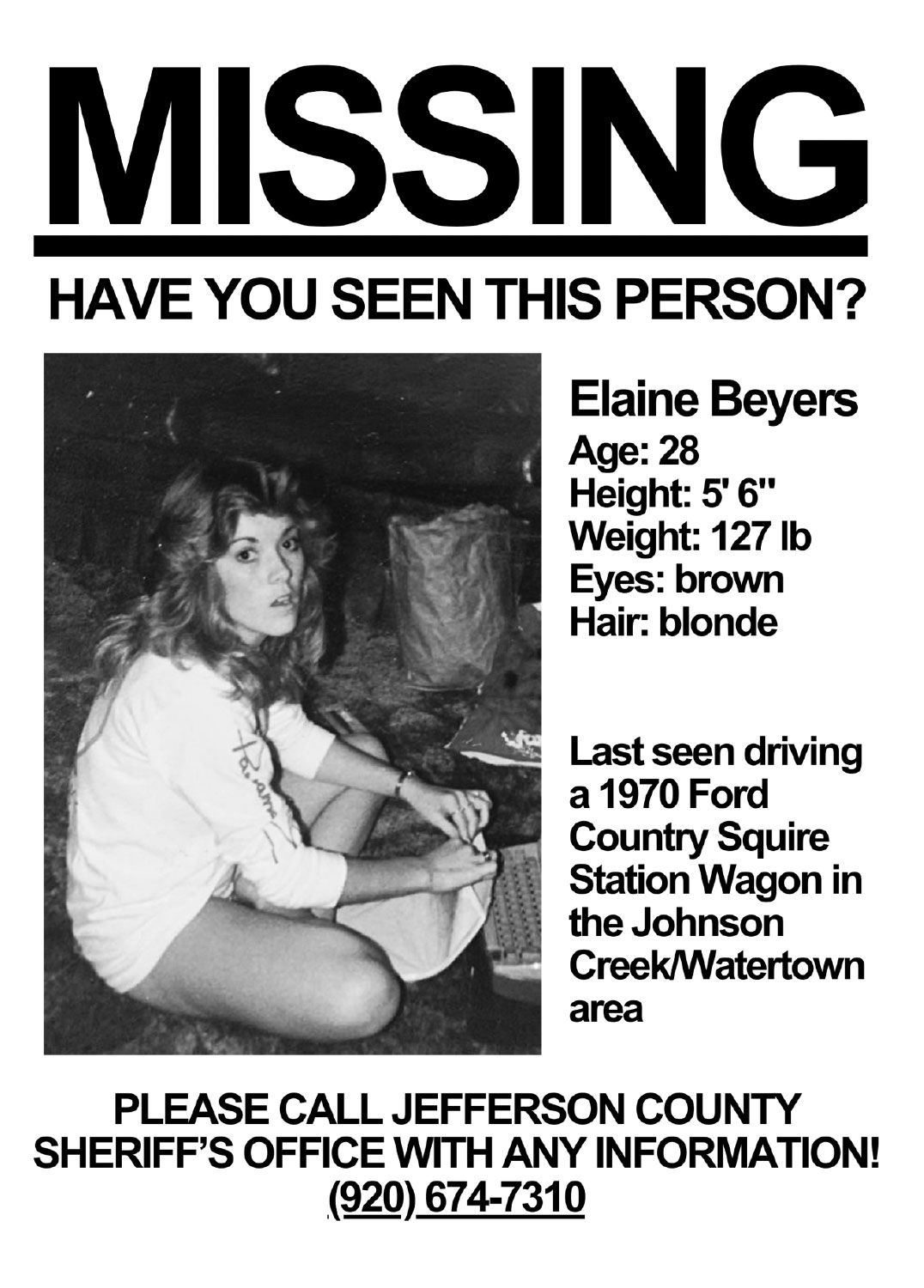
Elaine had spent years chasing ghosts. Newspaper clippings, police reports, missing persons bulletins—each one a breadcrumb leading her further into the dark. The timelines overlapped too neatly to ignore. Edward Edwards had been working at the Concord House in 1974. In 1980, he'd resurfaced two towns over, just months before Tim and Kelly were killed. Always nearby, always unnoticed. His name showed up on tax records, employment logs, even in the background of a photograph from the '74 prom—smiling in that easy, empty way that made Elaine’s skin crawl. At first, it had felt like a hunch. Now, it was a thread pulled so taut that if she tugged any harder, the whole thing would unspool.
Elaine didn’t need a confession, she simply knew. Edward Edwards had been here. Working. Watching. The Jefferson County Sheriff’s Department hadn’t put it together yet, but Elaine had: she knew it was the kind of place that didn’t just harbor darkness—it beckoned to it, like a wound drawing flies. Edward Edwards was only passing through. But some places don’t need long to leave a mark. Maybe he saw something in it, a stillness that welcomed men like him, that offered shelter not from the world, but from consequence.
The House wasn’t just abandoned. It was waiting.
To Elaine’s surprise, a black ram appeared adjacent to the front lawn. Its dark eyes glided effortlessly toward her—through her, almost—its matted coat heavy and full of shrubbery. As it neared the peeling white siding, the ram turned its large, long head and looked her way once more, this time directly at her.
Elaine blinked. The ram did not move.
She took one last drag of her cigarette and flicked it onto the frozen ground, watching the embers die at her feet. When she looked back up, the ram was gone. It wasn’t uncommon for neighboring farm animals to chew loose and end up on proximate properties, but the lingering image was enough to shove Elaine forward toward the House.
Get in, then get the hell out.
The lock was rusted, the door swollen from years of bipolar Wisconsin seasons beating against its frame. Elaine hesitated, her fingers curling around the frozen handle. The air smelled of damp wood, of something old and rotting beneath the surface, despite the burning cold. She inhaled sharply and pushed. The door groaned in protest before giving way, opening into a yawning darkness.
Inside, the air was stagnant, thick with dust and the ghosts of a thousand footsteps. The main hall stretched before her, a skeletal version of its former self. Cobwebs glimmering in frost crystals clung to the chandeliers dulled by time and neglect. The parquet floor, once polished to a mirror sheen, was now warped and splintered. Shadows pooled in the corners, stretching long and hungry in the faint blue light filtering through broken windows. Her boots whispered across the decayed carpet as she made her way past the abandoned ballroom, past the remnants of celebration and sorrow. The air grew even colder as she reached the hallway near the back, where the private rooms were. Where he had lived.
She stopped at a door. The wood was darker than the others, warped at the edges. Her breath caught in her throat.
She stepped inside.
The walls were yellowed with age, the wallpaper peeling in long, curling strips. An old dresser stood against the far wall, its mirror cracked down the middle like a surgical wound. The scent of mildew and something deeper—earthy, sour—rose from the floorboards.
She wasn’t alone.
A woman about Elaine’s age sat against the opposite wall, her long tan legs pulled to her chest, red nails twirling a ring on her thumb.
“You’re back?” the woman asked, tilting her head in question. “It’s been awhile since I’ve seen you.”
Elaine stayed silent, her throat tightening. She swallowed hard, fingers wrapping tighter around the crowbar at her side. The woman didn’t move, just watched her with dark, knowing eyes.
The floorboards groaned beneath Elaine’s weight as she sank to her knees, her audience’s eyes following as she went. She felt for the rusted screw and chiseled ident of a cross and wedged the crowbar’s mouth beneath the edge. It didn’t give. Shifting her weight, she pressed harder, feeling the wood strain before a faint crack echoed through the small room.
She looked up. The woman was smiling.
A slow, creeping dread settled into Elaine’s bones. Forcing her gaze back down, she pried at the boards with renewed urgency. Wood splintered beneath her fingers as the first plank came free, then another. Dust rose in a choking cloud, curling in the air like breath.
Elaine shielded her nose with her hand, the sour scent already burning her nostrils, and looked back up at the woman, who was now on her hands and knees crawling towards her.
“Oh Lillian, oh Lillian!” she mocked, punctuating each line with a stomp of her hand, “I’m so sorry, Lillian!”
The body was still there, hidden beneath warped floorboards and layers of time.
“Please forgive me, I promise I’ll be better for you, Lillian!”
Bones tangled in brittle remnants of fabric, ribs collapsed inward, the skull tilted at an unnatural angle, as if listening. Coils of chestnut hair, long since dulled, clung to what remained of her rotting scalp. The fingers, once soft and warm, were now nothing but curled claws resting atop the dirt like a broken bird.
“I always keep my promises, Lillian.”
Elaine squeezed her eyes shut so tight she began to see stars, and even then she could still feel the woman’s sour breath on her face, spitting out each syllable like venom.
“I’m not like her, Lillian.”
A sound—a pant, a sigh—rippled through the House.
Elaine’s pulse pounded. She opened her eyes—Lillian was gone.
The room was eerily silent. Elaine then reached down until her fingers brushed the dirt and rocks surrounding the real Lillian, feeling for the class ring. Instead, she was met with the edge of something flat and metallic, etched with a small five-pointed star inside a circle, just like the strange insignia stamped on Edward Edwards’ old timecard.
Part ii
The ring that should have been wrapped around brittle bird fingers was gone.
Elaine’s breath came fast and shallow. The House, the room, everything felt too tight. She clenched her jaw and forced herself to keep looking, searching the dark recesses again, dusting around the freezing dirt and rocks, but it wasn’t there. She leaned back, hand shaking as she wiped dirt from her palm, trying to steady it. The thing she’d touched—it wasn’t the ring. Flat. Cold. Metal. Etched with some kind of symbol.
Probably his.
This had been his room. Of course it had been here. Of course it had been waiting.
A prickle of unease crawled up her spine. Lillian had been buried with it—Elaine had made sure of that. The ring had belonged to someone else before her, a boy whose name she could no longer remember, a relic passed between hands. Lillian had always worn it. She used to spin it absently with her thumb when she was nervous, when she was thinking. Just like she had been doing minutes ago. Elaine forced herself to look again. Sweeping her hands through the dirt. Beneath the bones. Around them. Her fingers caught only splinters, shards of flooring, cold grit and silence.
Elaine swallowed hard.
She rocked back onto her heels. The crowbar slipped from her grip and clattered with a dull thud against the floor. She didn’t reach for it.
The skeletal remains hadn’t moved—curled and contorted just as she had left them, but the ring—
Elaine pressed the back of her hand to her mouth again, swallowing the nausea clawing its way up her throat. The floor beneath her knees felt damp, the wood swollen and rotting, like it had been holding more than just bones. This wasn’t right.
She forced herself to move and braced against the dresser as she pushed herself up. Her reflection split in the cracked mirror—a jagged, fragmented thing. She looked hollow. A woman peeling at the edges. Outside, the wind scraped against the siding, the branches tapping like impatient fingers.
Elaine turned away from the mirror. She needed to leave. She needed to think.
But the ring was gone. And something else was down there.
There had been no one in the House since 1984 when the Bender family sold it. No one living. No footsteps. No evidence. The county had boarded it up and walked away.
A familiar burn flared in her chest, hot and bitter. This was just her mind playing tricks, dredging up old ghosts. Edward Edwards was long gone, but the image of him kept trying to pull her under. Just like her mother.
Elaine closed her eyes, inhaling deeply. Her mother.
The first time she had truly understood fear, she had been six years old, hiding behind the couch while her mother screamed at a man she barely remembered—one of the sheriffs or their deputies, most likely. The kinds of men that would caress the back of her head when she’d peek out from behind the couch because they were fathers too, but then they’d follow her mother into the bedroom and that was that. The air smelled like cigarette smoke and spilled vodka. When the bottle hit the wall, she had flinched, biting down on her knuckles to keep from making a sound.
Later in life, her mother had become brittle, sharp-edged—a woman whittled down by bitterness. “Your existence has become a burden, and I have no intention of carrying it,” she’d once said, cigarette in hand, not looking up from the ashtray. They’d lived in the same house, slept under the same sagging roof, sometimes even shared the same yellow pillow, but it was never closeness. Elaine didn’t cry when she died. Couldn’t. The tears had dried up long ago. Instead, she learned how to hate.
She never cried. Not after that night with the sheriff, not any instance after, not even when she buried Lillian.
Elaine had tried to forget what happened that night, tried to erase the memory, but it was always there, like a smoldering ember she couldn't put out. The memories came in pieces now—warped by time, or maybe guilt. Or the absence of it. Some days Elaine wasn’t sure what she felt. Her mother’s death had shifted something, left a hole where anger had once been perfectly shaped. Lillian had filled that space like cement poured into a broken mold—too much, too quickly, and always the wrong texture. But now both were gone, and Elaine was left with the uneven weight of rage that had nowhere to go. It tilted her off-center.
Lillian had laughed, her voice high, mocking. “You’ve got your mother’s eyes,” she’d said. “Don’t you think?” The way her eyes had glinted with a mixture of pity and contempt, as if she saw all the cracks. As if she knew.
Elaine’s chest had tightened. She hadn’t been able to swallow the heat rising in her throat—so familiar, so uncontrollable.
She didn’t answer. She didn’t have to.
Elaine’s cigarette burned down to almost nothing, a small crackling ember that seemed so insignificant in comparison to the thing gnawing at her insides. Her hand had shaken when she flicked the remains into the snow.
Lillian had been talking again about something else, her voice muffled and reverberating as if she were underwater. Almost drowning.
Something inside Elaine snapped. It wasn’t a decision. It was an instinct—an eruption, a drowning, the drowning that overtook her completely. She didn’t think, didn’t plan. One second, Lillian had been standing there, the wind tugging at her golden hair, the next she wasn’t. The anger came faster than the thought of throwing it away.
Without a word, Elaine moved. The next thing she knew, her hands were around Lillian’s throat.
Elaine had always been stronger than she looked; years of hauling furniture back into place after her mother’s drunken fits, dragging splintered chairs and shattered lamps across the floor like a quiet janitor of rage, had made her wiry, resilient. She’d gotten used to picking up the pieces, both literal and not. Her grip wasn’t delicate; it was forged in the fire of holding too tightly to things that were already broken. Lillian had joked once that Elaine could break bones if she ever wanted to. She hadn’t been wrong.
The pressure felt so natural, so right. Her fingers dug into soft skin, squeezing tight, cutting off breath. Lillian’s eyes widened, fingers clawing at Elaine’s hands, but it didn’t matter. The struggle lasted only a few seconds—long enough to see that flash of disbelief in her eyes.
The world went still, except for the sound of her own breath, ragged and deep. Lillian’s body went limp in her grip.
Elaine dropped her to the ground, staring at her best friend’s face, the only sound now was her panting in the cold.
She’d never spoken a word about it. Not to anyone. Not even to herself.
And it wasn’t in Edward Edwards’ tally of sins.
That night, as she scrubbed her hands raw and buried Lillian beneath the floorboards, that seed of an idea had taken root. Edward Edwards had already carved a path of terror through the Concord House. He was a shadow that trailed behind death and decay. She fed the inclination to anyone who would listen—not directly, not all at once. But in sideways comments, nervous glances, the way her voice would tremble at the mention of his name. She dropped breadcrumbs, and the county picked them up. Over time, she became the scared friend, the haunted survivor. People wanted to believe he’d taken another girl. It made more sense than imagining the quiet daughter of an alcoholic, a girl who wore bruises like jewelry, could be capable of something so final. Elaine had hoped for it—and worse, she had helped it along.
But sitting here, in this room, where she had pressed her best friend’s body into the dirt, contorting her like a child sleeping in a cradle that was too small, she couldn’t shake the truth of it. Lillian had been the only one who ever truly saw her—and wielded that understanding like a blade. She knew how to twist vulnerability into leverage, how to turn a confession into a weapon. Lillian had once told Elaine she was “too open, too raw,” that one day someone would carve her up with her own honesty.
She hadn’t realized then that Lillian would be the one to do it.
Because Lillian hadn’t only seen her—she’d understood her. Understood what it meant to grow up in a house where love came with a bruise. Understood that sometimes survival meant pretending you didn’t feel anything at all. Lillian had seen all of that in Elaine—the fear, the fire, the fury—and had admired it like it was a pretty scar. Then she’d pressed on it, again and again, until the skin broke. And still—Elaine had buried her beneath these floorboards.
The sound came again. A breath, a whisper.
Elaine froze.
She needed to leave.
With shaking hands, she slid each board back into place. They didn’t align the way they had before. She had seen to it—everything had been disturbed, the hidden grave she had made for Lillian now unearthed. But still, she had to make it look the way it was. It wasn’t just the House that had memories, it was her too. And she couldn’t face those memories exposed any more than she could face the fact that Lillian was gone because of her.
She wasn’t sure if the dust settled in the same way it had, or if the air would ever feel the same again. When she finished, it felt like the room had swallowed her whole. There was nothing left but the weight of the past pressing down on her. Everything was back where it belonged, but nothing was.
Stumbling toward the door, she left the room and closed it behind her, the old hinges protesting with a loud groan. The hall outside felt colder, more oppressive than when she had entered. The House seemed to pulse in time with her own heart, the walls closing in as she, again, walked through the abandoned ballroom, past the chipped and broken remnants of celebrations that had long since died.
Stepping outside, the frozen air cut through her. She walked, eyes watering and nose stinging, not thinking, just putting one foot in front of the other. She needed to get away from this place, needed to find some peace, but it wouldn’t come. It never had.
By the station wagon, her breath was clouding the air as she gripped the cold metal of the door handle. She paused.
"I'm sorry," she whispered, the words barely audible in the night air. They hung between her and the House, her guilt hanging thick like the fog that surrounded her. Tears started to blur her vision, but she didn’t wipe them away.
She dropped her head and let out a shaky breath.
And then she heard it.
A clink.
The sound of metal against gravel. Her heart stopped. She looked down, and there, lying in front of her on the frozen ground, was the class ring. The same one Lillian had always worn. She hadn’t been able to find it inside, but there it was, sitting in the driveway as if it had always belonged there.
Her stomach churned. She bent down slowly, reaching for it with trembling fingers. As her hand hovered just above it, a cold pressure pressed against the back of her head.
Elaine froze, her breath catching in her throat.
A click. The unmistakable sound of a gun’s safety being taken off.
The weight of the barrel pressed against her skin, colder than the night around her. She could feel it, its promise of finality. Her pulse thundered in her ears, louder than the wind, louder than the steady tick of time that was slipping away—then, something else.
Standing at the edge of the property, barely visible through the thick fog, was the black ram. Its eyes were dark pits, body as still as death. It stood with its head tilted slightly, eyes glimmering in the fading light, staring her down one last time. Elaine’s breath caught in her chest, the memory of its presence back when she had first seen it flooding through her. This time, there was no uncertainty in the air, no doubt that something ancient and unyielding had come to claim its due. It didn’t make a sound, just stood there, watching her.
A final witness.
A final reckoning.
The gun pressed harder against her skull, a firm caress. The ram turned slowly, its dark eyes fading into the mist.
Epilogue

.svg)
.svg)